


In today’s fast-paced digital landscape, your business needs to stay ahead of the curve. Implementing an ai customer support receptionist is a transformative step toward modernizing how you interact with your audience. This technology acts as a cornerstone for your communication strategy, ensuring that no inquiry goes unanswered.
By automating routine tasks, you maintain high standards of service while freeing up your team for complex projects. You will find that this tool is essential for staying competitive in a crowded market. Adopting an ai customer support receptionist allows you to provide instant, reliable assistance around the clock. This shift not only improves your operational efficiency but also builds lasting trust with your clients.
Key Takeaways
- Provides 24/7 availability for all incoming inquiries.
- Increases operational efficiency by automating routine tasks.
- Ensures consistent service quality across all interactions.
- Allows your team to focus on high-value business objectives.
- Helps your brand remain competitive in a fast-paced digital market.
The Evolution of Modern Customer Service
The landscape of customer interaction has shifted dramatically in recent years. Businesses that once relied on standard business hours now face a global market that never sleeps. This digital transformation has forced companies to rethink how they engage with their audience at every touchpoint.
Shifting Consumer Expectations in the Digital Age
Today, your customers expect instant gratification when they reach out for help. They no longer view a 24-hour response time as acceptable; instead, they demand immediate solutions regardless of the time of day. This shift makes customer experience optimization a top priority for any brand aiming to remain competitive.
Modern consumers utilize multiple channels, including social media, live chat, and email, to voice their concerns. If your business cannot provide a consistent experience across these platforms, you risk losing loyalty. Embracing modern help desk technology is the most effective way to meet these high expectations without burning out your staff.
The Limitations of Traditional Human-Only Support
Relying exclusively on human agents often creates significant bottlenecks during peak traffic periods. When your team is overwhelmed by repetitive inquiries, they lose the ability to provide high-quality service for complex issues. This is where automated customer service becomes a vital asset for your operations.
Traditional models struggle to scale effectively as your business grows. By integrating smart tools, you can handle routine tasks while allowing your team to focus on high-value interactions. The following table highlights the key differences between legacy support and modern, tech-driven approaches.
| Feature | Traditional Support | Modern AI-Driven Support |
|---|---|---|
| Availability | Limited to business hours | 24/7 instant access |
| Response Time | Delayed (hours/days) | Immediate (seconds) |
| Scalability | Requires more headcount | Handles volume automatically |
| Consistency | Varies by agent | Uniform brand voice |
Understanding the AI Customer Support Receptionist
Understanding the mechanics behind an ai customer support receptionist is essential for modern business owners. This technology serves as a sophisticated interface that bridges the gap between your company and your clients.
By acting as the first point of contact, these systems ensure that every inquiry receives immediate attention. This foundational knowledge helps you leverage these tools to improve your daily operations.
Defining AI-Driven Communication Technology
At its core, this technology represents a significant leap in digital transformation. It moves beyond simple automated phone trees to provide a dynamic, intelligent experience for your callers.
As a key component of modern help desk technology, these systems are designed to handle high volumes of traffic without fatigue. They provide a consistent brand experience that remains available regardless of the time of day.
How Natural Language Processing Powers Interactions
The true power of these systems lies in natural language processing. This advanced field of computer science allows the software to interpret the intent behind a customer’s words rather than just matching keywords.
Because of natural language processing, the system can understand context, tone, and complex requests with impressive accuracy. It mimics human-like conversation to ensure that your customers feel heard and understood during every interaction.
By processing information in real-time, an ai customer support receptionist can resolve routine issues instantly. This allows your human team to focus their energy on high-value tasks that require a personal touch.
Achieving True 24/7 Availability
Imagine a world where your business remains active and helpful every single hour of the day. In today’s fast-paced market, customers expect immediate answers regardless of the time on the clock. Providing 24/7 customer support is the most effective way to meet these high expectations and build lasting trust with your audience.
Eliminating After-Hours Support Gaps
Traditional support models often leave customers frustrated when they reach out outside of standard business hours. By implementing AI-driven support solutions, you can bridge these gaps instantly. Your system will handle inquiries, troubleshoot common issues, and provide helpful resources while your human team rests.
“The future of customer service is not just about being present; it is about being available exactly when the customer needs you, without delay or friction.”
This approach ensures that no lead goes cold and no question remains unanswered. You create a seamless experience that keeps your brand relevant and reliable around the clock. Utilizing AI-driven support solutions allows you to maintain high service standards without requiring your staff to work overnight shifts.
Handling Global Time Zones Without Extra Staffing
Expanding your reach to international markets often creates complex scheduling challenges. Managing different time zones typically requires expensive, round-the-clock staffing that can strain your budget. Fortunately, scalable customer service tools allow you to overcome these geographic barriers with ease.
You can now offer consistent, high-quality assistance to clients in London, Tokyo, or New York simultaneously. This technology acts as a digital extension of your team, ensuring that your brand voice remains consistent across every interaction. Adopting scalable customer service is a smart strategy for any business looking to grow globally while keeping operational costs under control.
Enhancing Response Times and Efficiency
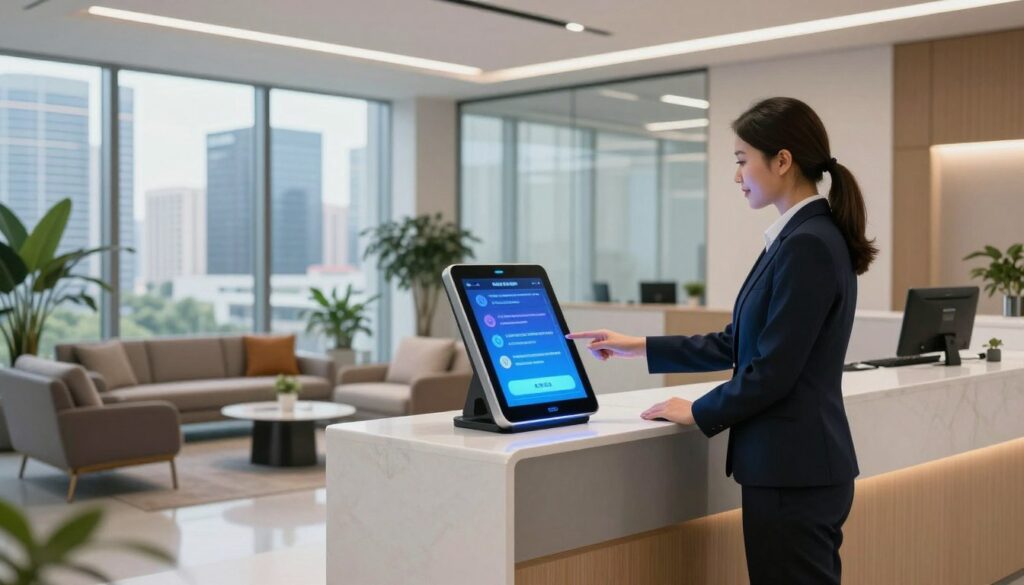
Real-time engagement is no longer a luxury but a standard requirement for your business. Customers today expect immediate answers, and failing to meet this demand can lead to lost opportunities. By leveraging automated customer service, you can ensure that your brand remains responsive around the clock.
Instant Resolution for Routine Inquiries
Many support requests involve repetitive questions that do not require human intervention. Through the power of natural language processing, your systems can interpret intent and provide accurate answers in milliseconds. This is one of the primary AI chatbot benefits, as it allows your team to offload simple tasks while maintaining high service standards.
When your system handles common queries instantly, you create a smoother experience for your users. They no longer need to wait for an agent to become available for basic account updates or shipping status checks. This level of efficiency keeps your operations lean and your customers satisfied.
Reducing Wait Times During Peak Traffic
High traffic periods often overwhelm traditional support teams, leading to frustrating delays. Implementing intelligent automation allows you to scale your capacity instantly without hiring additional staff. You can maintain real-time customer engagement even when your inquiry volume spikes unexpectedly.
The following table highlights how automation improves your operational efficiency compared to traditional manual support methods:
| Metric | Manual Support | Automated Support |
|---|---|---|
| Response Time | Minutes to Hours | Instant |
| Capacity | Limited by Staff | Unlimited |
| Consistency | Variable | High |
| Cost per Query | High | Low |
By integrating these tools, you ensure that your business remains agile. Natural language processing helps bridge the gap between high demand and limited resources. Ultimately, these AI chatbot benefits empower you to focus on growth while your automated systems handle the heavy lifting of daily inquiries.
Cost-Effectiveness and Resource Allocation
Scaling a business often feels like a constant battle between providing quality service and controlling rising expenses. As your customer base grows, the traditional model of hiring more staff to handle every inquiry becomes unsustainable. By leveraging AI-driven support solutions, you can transform your financial strategy and maintain high standards without ballooning your payroll.
Lowering Operational Overhead for Small Businesses
Small businesses often operate on thin margins, making operational efficiency a top priority for long-term survival. When you automate routine inquiries, you are effectively reducing support costs by minimizing the need for 24/7 human coverage. This shift allows you to reallocate funds toward product development or marketing efforts that drive growth.
Implementing these tools provides a predictable cost structure that scales alongside your business. Instead of paying for overtime or expensive night shifts, you rely on technology that never sleeps. This approach ensures that your budget remains stable even during periods of rapid expansion.
Allowing Human Agents to Focus on Complex Tasks
The true power of human-AI collaboration lies in how it elevates the role of your support team. When AI handles repetitive questions like order status or password resets, your employees are free to tackle high-value, complex issues. This strategic division of labor improves job satisfaction and ensures that your customers receive expert attention when they need it most.
By offloading mundane tasks, you empower your staff to build deeper relationships with your clients. This creates a more sustainable model where technology handles the volume, and humans provide the empathy. The following table illustrates how this transition optimizes your internal resources.
| Task Category | Manual Support | AI-Supported Workflow |
|---|---|---|
| Routine Inquiries | High Time Consumption | Instant Resolution |
| Complex Issues | Delayed Response | Prioritized Attention |
| Operational Cost | High Variable Expense | Low Fixed Investment |
| Staff Utilization | Burnout Risk | High-Value Focus |
Ultimately, adopting AI-driven support solutions is not about replacing your team, but about optimizing their potential. By focusing on operational efficiency, you create a resilient support department that thrives under pressure. This commitment to smart resource allocation is the key to staying competitive in a crowded market.
Personalization at Scale
Modern technology allows you to treat every customer like your only customer, regardless of scale. Achieving true customer experience optimization requires moving beyond generic templates to provide meaningful, relevant support. By leveraging intelligent systems, you can ensure that your growth does not dilute the quality of your service.

Utilizing Customer Data for Tailored Responses
Your existing customer data serves as the foundation for personalized customer interactions. When an AI receptionist accesses your CRM, it instantly recognizes returning users and recalls their purchase history or previous inquiries. This allows the system to offer proactive solutions rather than asking for information you already possess.
By analyzing past behavior, the AI can anticipate needs before the customer even articulates them. This level of foresight transforms a standard support request into a highly efficient and helpful conversation. You save time while the customer feels valued and understood.
Maintaining Brand Voice Across Every Interaction
Consistency is vital for building trust, especially when you rely on AI chatbot benefits to handle high volumes of traffic. You can program your digital assistant to mirror your company’s specific tone, whether that is professional, playful, or strictly technical. This ensures that every automated response feels like a natural extension of your team.
Maintaining a uniform brand voice across scalable customer service channels prevents confusion and reinforces your identity. When your automated systems sound exactly like your human staff, the transition between bot and person becomes invisible. This seamless approach keeps your messaging sharp and your reputation intact.
| Feature | Manual Support | AI-Driven Support |
|---|---|---|
| Response Speed | Variable | Instant |
| Data Recall | Agent Dependent | Automatic |
| Brand Consistency | Hard to Control | Always Uniform |
| Scalability | Limited by Staff | Unlimited |
Seamless Integration with Existing Business Tools
Achieving true operational efficiency requires your AI receptionist to communicate seamlessly with your current software suite. When your digital assistant functions as a silo, you miss out on the full potential of your data. By creating a unified workflow, you ensure that every interaction contributes to a more cohesive customer experience.
Connecting AI with CRM and Ticketing Systems
Linking your AI receptionist to your CRM and ticketing platforms allows for real-time customer engagement that feels both personal and informed. When a customer reaches out, the AI instantly pulls their history, preferences, and open tickets. This level of connectivity is essential for any modern omnichannel support strategy.
Your team no longer needs to toggle between multiple tabs to find basic information. Instead, the AI updates your systems automatically, ensuring that human agents have the most accurate data at their fingertips. This integration transforms your support process from a reactive task into a proactive service model.
Automating Appointment Scheduling and Data Entry
Leveraging business automation tools to handle repetitive tasks is one of the fastest ways to scale your operations. Your AI receptionist can sync directly with your calendar to book appointments without any manual intervention. This eliminates the back-and-forth emails that often lead to scheduling conflicts or missed opportunities.
Furthermore, the AI handles routine data entry, such as updating contact details or logging interaction summaries. By automating these mundane duties, you significantly reduce the risk of human error. Your staff can then dedicate their energy to high-value tasks that require critical thinking and empathy.
| Workflow Feature | Manual Process | Integrated AI Process |
|---|---|---|
| Data Entry | Slow and error-prone | Instant and accurate |
| Scheduling | Requires manual coordination | Automated sync |
| Customer History | Fragmented across apps | Centralized in CRM |
| Response Time | Delayed by human availability | Immediate 24/7 support |
Data Collection and Actionable Insights
You can unlock hidden growth opportunities by tapping into the wealth of information captured during every automated conversation. By utilizing business automation tools, you transform routine inquiries into a structured database of user behavior. This process turns every interaction into a valuable asset for your company.
Analyzing Customer Sentiment and Common Pain Points
Modern technology allows you to perform customer sentiment analysis with incredible precision. By tracking the tone and language used by callers, you gain a clear picture of how people feel about your brand. This level of customer data analytics helps you identify frustration before it leads to churn.
You will quickly notice patterns in the questions being asked. When many users struggle with the same feature, the AI flags these recurring pain points automatically. Addressing these specific issues allows you to refine your support approach and improve user satisfaction.
Using Analytics to Improve Product and Service Offerings
Integrating these insights into your omnichannel support strategy ensures that your team stays ahead of market trends. You can use the data to prioritize product updates that solve the most frequent user complaints. This proactive method turns your support department into a hub for innovation.
Making informed decisions based on real-time feedback is essential for long-term success. When you align your service quality with actual user needs, you build stronger loyalty. The following table highlights how specific metrics translate into tangible business improvements.
| Data Metric | Business Insight | Actionable Outcome |
|---|---|---|
| Sentiment Score | Customer Satisfaction | Refine Tone of Voice |
| Query Frequency | Common Pain Points | Update Product FAQ |
| Resolution Time | Process Efficiency | Optimize Workflow |
| Channel Usage | Support Preferences | Adjust Resource Allocation |
Overcoming Common Implementation Challenges
Successfully deploying an AI system requires more than just technical setup; it needs a thoughtful AI implementation strategy. While the benefits of automation are clear, you must proactively address potential roadblocks to ensure a smooth transition. By anticipating these hurdles, you can build a robust support environment that your customers will trust.
Ensuring Data Privacy and Security Compliance
Protecting sensitive information is the foundation of any successful digital transformation. You must prioritize data privacy by selecting platforms that adhere to strict industry standards like GDPR or CCPA. Implementing robust encryption and regular security audits will help you maintain the integrity of your customer data analytics.
Transparency is equally vital when handling user information. Clearly communicate your data policies to your clients to foster long-term trust. When customers feel secure, they are more likely to engage openly with your automated systems.
Balancing Automation with Human Empathy
Technology should enhance your service, not replace the warmth of human connection. The most effective approach relies on human-AI collaboration, where machines handle routine tasks while your team manages complex emotional needs. This synergy ensures that your personalized customer interactions remain authentic and meaningful.
Leveraging customer sentiment analysis allows your system to detect when a conversation becomes too sensitive for an AI. In these moments, the software can seamlessly escalate the issue to a human agent. This intelligent hand-off ensures that no customer feels ignored or misunderstood during difficult situations.
The goal of AI is not to replace human support, but to empower it by removing the friction of repetitive tasks.
Conclusion
Adopting an AI receptionist transforms how your company interacts with every client. You gain the ability to provide 24/7 customer support that never sleeps or takes a break. This shift ensures your brand remains reliable in a fast-paced digital world.
Your focus on reducing support costs becomes a reality when you automate routine tasks. You free your human team to handle complex issues that require a personal touch. This balance creates a more efficient workflow for your entire organization.
Success depends on a clear AI implementation strategy that aligns with your specific goals. You should view this technology as a long-term investment in your growth. It builds a foundation for better service and higher satisfaction levels across your customer base.
Start your transition today to stay ahead of your competitors. You have the tools to modernize your communication channels and improve your bottom line. Your commitment to innovation will define your success in the years ahead.
FAQ
How does an AI customer support receptionist modernize your business communication strategy?
By implementing an AI customer support receptionist, you transform your operations from a reactive model into a proactive, modern communication strategy. This technology serves as a cornerstone for maintaining high standards of service while ensuring your brand remains competitive in a fast-paced digital landscape where speed is a top priority.
Why is human-only support becoming insufficient for modern consumer expectations?
The digital age has fundamentally shifted what your customers expect regarding availability and speed. Relying solely on human-only support often leads to bottlenecks and long wait times that hinder growth. An AI solution addresses these limitations by providing the instant connectivity that modern consumers demand.
What role does Natural Language Processing play in AI-driven interactions?
Natural Language Processing (NLP) is the engine that allows the system to understand and respond to complex customer queries with human-like accuracy. This AI-driven communication technology functions as a sophisticated interface, ensuring that your customers feel heard and understood without the need for rigid, menu-based prompts.
How can your business eliminate after-hours support gaps?
Achieving true 24/7 availability allows you to eliminate after-hours support gaps that typically alienate potential clients. By leveraging AI, you can manage global time zones effectively, ensuring your brand is accessible at 3:00 AM just as easily as at 3:00 PM without the high costs of additional overnight staffing.
Can an AI receptionist handle high volumes of inquiries during peak traffic?
Yes. One of the primary advantages of this technology is the instant resolution of routine inquiries. During peak traffic periods, the AI manages high volumes of requests simultaneously, drastically reducing wait times and ensuring your service remains efficient even when your human team is at full capacity.
How does AI help in lowering operational overhead for small businesses?
Adopting AI is a highly cost-effective strategy that lowers operational overhead by automating repetitive tasks. This allows for better resource allocation, where your human agents are freed from mundane data entry and can focus their expertise on complex, high-value tasks that require deep problem-solving.
Is it possible to maintain a consistent brand voice with automated personalization?
Absolutely. By utilizing customer data from your records, the AI can provide tailored responses that resonate on an individual level. You have full control over the scripts and tone, ensuring your unique brand voice remains professional and consistent across every single interaction, regardless of the scale.
Does the AI integrate with existing tools like Salesforce or Zendesk?
Most advanced AI receptionists offer seamless integration with industry-standard CRM and ticketing systems, such as Salesforce, Zendesk, or HubSpot. This creates a unified workflow where the AI can automate appointment scheduling and update records in real-time, reducing the risk of human error.
What kind of actionable insights can you gain from AI analytics?
The system acts as a powerful tool for data collection, allowing you to analyze customer sentiment and identify common pain points. These actionable insights enable you to use analytics to proactively improve your product offerings and refine your overall service quality based on actual user behavior.
How do you handle data privacy and security compliance with AI?
When implementing AI, it is crucial to ensure strict data privacy and security compliance with standards such as GDPR or SOC2. Professional AI providers build their systems with encryption and privacy-first protocols to ensure your customer information is protected, maintaining the trust your audience places in your brand.
How do you balance the efficiency of automation with human empathy?
The most effective strategy is a hybrid approach. While the AI provides efficiency and speed for routine tasks, it is designed to hand off sensitive or emotional situations to a human representative. This balance ensures that human empathy is available when it matters most, while automation handles the heavy lifting of daily inquiries.