
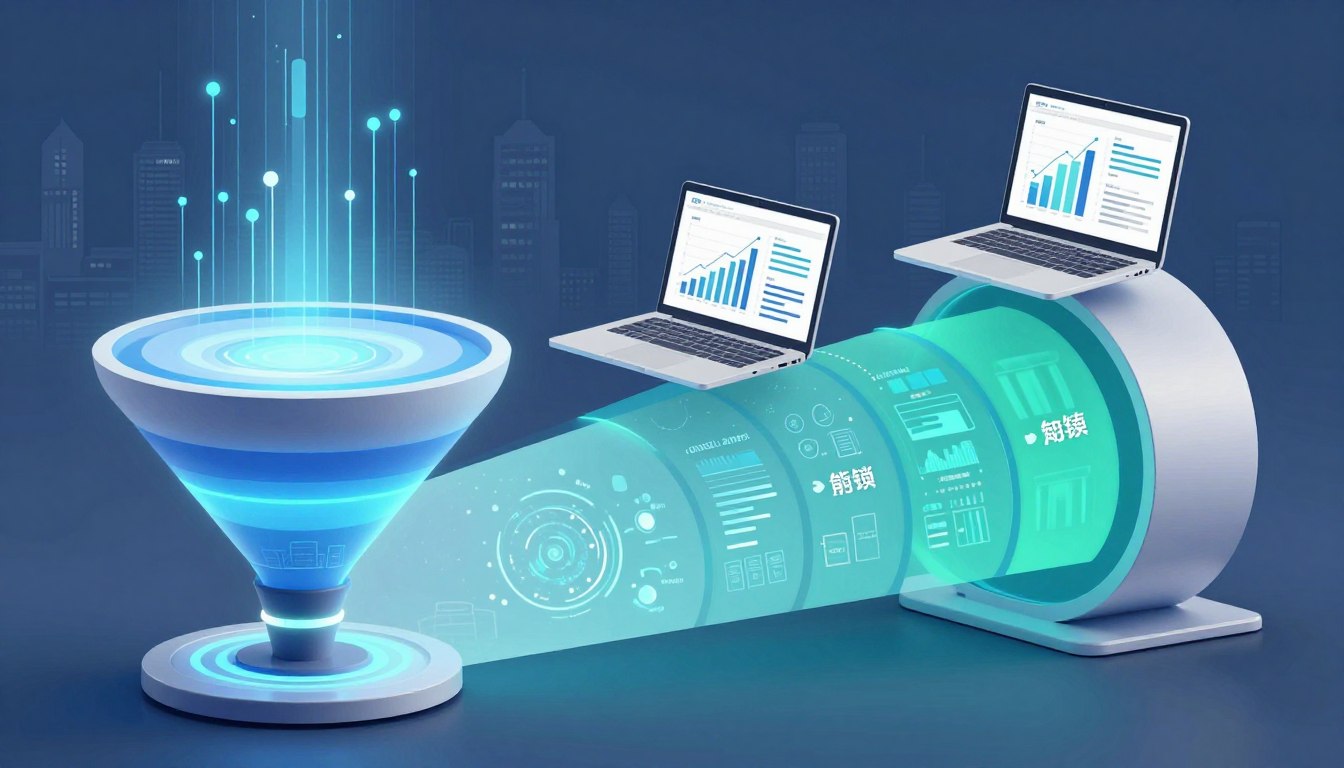

The landscape of digital commerce is shifting rapidly as businesses embrace smarter ways to connect with their customers. By implementing an ai sales funnel, you can transform how your organization interacts with potential leads. This technology moves beyond simple automation to provide deep insights into consumer behavior.
Integrating these advanced tools into your daily workflow creates a highly responsive environment. You gain the ability to predict needs before they arise, ensuring your messaging hits the mark every time. This proactive approach helps you nurture relationships with precision and speed.
Ultimately, these systems streamline the path from initial contact to final purchase. You will find that your team spends less time on manual tasks and more time building meaningful connections. Embracing this evolution is essential for staying competitive in today’s fast-paced market.
Key Takeaways
- Advanced technology significantly improves how you engage with potential customers.
- Predictive insights allow for more personalized and effective communication strategies.
- Automation reduces manual workload, freeing your team for high-value tasks.
- A streamlined journey increases the likelihood of converting leads into loyal buyers.
- Modern tools provide a distinct competitive advantage in the current digital landscape.
The Evolution of Sales Funnels in the Digital Age
Gone are the days when a simple, straight line could describe the path to a purchase. In the current digital age, the way customers interact with brands has become increasingly complex and non-linear. You must recognize that your sales process is no longer a static sequence of events but a living, breathing ecosystem.
From Traditional Linear Models to Dynamic Journeys
Traditional models often assumed that a prospect moved predictably from awareness to interest and finally to a decision. Today, buyers jump between channels, research independently, and engage with content on their own terms. This shift requires you to build a dynamic journey that meets the customer wherever they are.
“The customer journey is not a straight line; it is a web of interactions that requires constant attention and agility.”
To succeed, you should focus on creating touchpoints that provide value at every stage. Consider these elements of a modern, flexible framework:
- Multi-channel engagement across social media and email.
- Self-service resources that empower the buyer.
- Personalized interactions that address specific pain points.
The Shift Toward Data-Driven Decision Making
Relying on intuition is no longer enough to maintain a competitive edge. The digital age provides an abundance of information that allows you to refine your sales process with surgical precision. By leveraging real-time analytics, you can identify exactly where prospects drop off and why.
Data-driven decision making transforms your strategy from reactive to proactive. You can now anticipate needs before the customer even voices them. This level of insight ensures that your team spends time on high-value activities rather than guessing what might work next.
Defining the AI Sales Funnel and Its Core Components
You can transform your revenue operations by defining the core components that make up a modern ai sales funnel. This framework moves beyond simple lead tracking to create a dynamic ecosystem where data drives every interaction. By mapping out these stages, you ensure that your technology stack works in harmony to guide prospects toward a purchase.
How Artificial Intelligence Integrates with CRM Systems
The heart of your strategy lies in how artificial intelligence connects with your existing CRM systems. Rather than operating as a separate tool, AI acts as an intelligent layer that cleans, organizes, and interprets your customer data in real time. This integration allows you to maintain a single source of truth for every prospect interaction.
When your platform automatically updates records, it eliminates the manual burden that often slows down your team. You gain the ability to see hidden patterns in customer behavior that would otherwise remain buried in spreadsheets. This level of visibility is essential for making informed decisions that drive growth.
Key Technologies Powering Modern Sales Automation
To scale your operations effectively, you must leverage specific tools that drive sales automation. These technologies do more than just send emails; they analyze intent and trigger actions based on complex behavioral triggers. By utilizing machine learning, your system learns which outreach methods yield the highest conversion rates over time.
Several core technologies form the backbone of this process:
- Predictive Lead Scoring: Automatically ranks prospects based on their likelihood to close.
- Natural Language Processing: Analyzes communication sentiment to improve response quality.
- Automated Workflow Engines: Executes multi-step sequences without human intervention.
Implementing these components allows you to focus on high-value tasks while the software handles repetitive processes. Embracing this technological shift ensures that your business remains competitive in an increasingly digital marketplace.
Automating Lead Generation and Prospecting
You can significantly improve your efficiency by automating the top of your sales funnel. By shifting away from manual data entry, your team gains more time to focus on closing deals. Effective sales automation allows you to capture and qualify potential customers with greater speed and accuracy.
Using Predictive Analytics to Identify High-Value Leads
Modern predictive analytics tools analyze vast amounts of historical data to forecast future buying behavior. Instead of guessing which prospects might convert, you can rely on data-driven scores to rank your leads. This ensures your sales representatives prioritize the individuals most likely to make a purchase.
By identifying high-value targets early, you reduce the time wasted on cold leads that lack genuine interest. These systems continuously learn from your successful conversions, refining their accuracy over time. Consequently, your outreach becomes more targeted and highly personalized.
Leveraging AI-Powered Chatbots for Instant Engagement
AI-powered chatbots serve as your digital front line, providing instant responses to visitor inquiries at any hour. These tools ensure that no potential lead generation opportunity slips through the cracks while your team is offline. By asking qualifying questions, chatbots can instantly determine if a visitor is a good fit for your services.
Beyond simple greetings, these bots can schedule meetings directly into your calendar. This seamless integration removes friction from the initial contact phase. Your prospects receive immediate value, which significantly boosts their trust in your brand.
| Feature | Manual Process | Automated Process |
|---|---|---|
| Lead Qualification | Slow and subjective | Instant and data-driven |
| Response Time | Hours or days | Immediate 24/7 |
| Data Accuracy | Prone to human error | High precision |
| Sales Automation | Limited | Comprehensive |
Personalizing the Customer Experience at Scale
Modern buyers expect a tailored journey that feels like it was built just for them. Delivering a high-quality customer experience is no longer a luxury but a necessity for sustainable growth in a crowded market. You can now scale your outreach efforts without losing the personal touch that wins deals.
By leveraging advanced technology, you ensure that every interaction feels relevant. This approach helps you build trust faster and keeps your brand top-of-mind throughout the buying cycle.
Dynamic Content Delivery Based on User Behavior
Your website and landing pages should act as a living, breathing entity that adapts to the visitor. When you track specific user behaviors, you can instantly adjust the content displayed to match their interests or pain points.
For example, if a prospect repeatedly visits your pricing page, your system can trigger a specific case study or a discount offer. This level of dynamic personalization ensures that your messaging remains highly relevant. It transforms a generic browsing session into a unique path that guides the user toward a conversion.
Tailoring Email Outreach with Generative AI
Scaling your email efforts often leads to robotic, impersonal messages that prospects ignore. However, generative AI allows you to craft unique, human-like emails for thousands of leads simultaneously. You no longer have to choose between volume and quality.
These tools analyze historical data to suggest subject lines and body copy that resonate with specific segments. By using generative AI, you ensure that your outreach feels thoughtful and timely. This strategy significantly boosts your open rates and strengthens the overall customer experience by providing value in every single message you send.
Optimizing Lead Nurturing Through Machine Learning
Modern sales teams are constantly seeking ways to improve their engagement strategies. By utilizing machine learning, you can transform how you interact with potential customers throughout their journey. This technology allows you to move beyond manual processes and embrace a more responsive approach to lead nurturing.
Scoring Leads with Precision Using Behavioral Data
Traditional scoring methods often rely on static information like job titles or company size. However, machine learning models analyze complex behavioral patterns to provide a more accurate picture of prospect intent. You can track how users interact with your website, emails, and content to determine their true level of interest.
This granular approach ensures that your sales team focuses their energy on the most promising opportunities. By identifying high-intent signals early, you improve your overall lead nurturing efforts significantly. You no longer have to guess which prospects are ready to buy, as the data provides clear indicators of their readiness.
Automating Follow-up Sequences for Maximum Conversion
Consistency is the backbone of any successful sales strategy. When you automate your follow-up sequences, you ensure that no prospect falls through the cracks during the decision-making process. These automated workflows allow you to deliver personalized content at the exact moment it is most relevant to the user.
You can maintain a steady cadence of communication without increasing your administrative workload. This efficiency helps you build trust and authority with your audience over time. Ultimately, integrating these automated systems into your lead nurturing strategy leads to higher conversion rates and a more streamlined sales pipeline.
Enhancing Sales Forecasting and Pipeline Management
Modern sales success depends on your ability to look ahead with absolute clarity. By integrating advanced tools into your daily operations, you gain the visibility needed to make informed decisions. Effective pipeline management ensures that every opportunity is tracked, nurtured, and moved toward a successful close.

Predicting Revenue Trends with Historical Data Analysis
You can move beyond simple guesswork by utilizing predictive analytics to evaluate your past performance. By examining historical data, your system identifies patterns that indicate which leads are most likely to convert. This approach allows you to forecast revenue with much higher accuracy than traditional manual methods.
When you understand these trends, you can allocate your resources more effectively. Consider these primary benefits of data-driven forecasting:
- Improved accuracy in quarterly revenue projections.
- Better alignment between marketing efforts and sales goals.
- Enhanced ability to spot seasonal fluctuations in buyer behavior.
Identifying Bottlenecks in Your Current Sales Process
Even the most talented teams face friction that slows down growth. You must regularly audit your sales process to find where deals stall or drop off entirely. AI tools provide the transparency required to pinpoint these specific areas of concern.
The following table outlines common stages where friction occurs and how to address them using modern technology:
| Process Stage | Common Bottleneck | AI Solution |
|---|---|---|
| Lead Qualification | Slow response times | Automated lead scoring |
| Proposal Phase | Delayed document review | Predictive analytics |
| Closing | Lack of follow-up | Automated engagement |
By resolving these bottlenecks, you ensure a smoother flow of opportunities through your funnel. Consistent sales forecasting combined with a refined sales process creates a powerful engine for sustainable growth. You will find that your team spends less time searching for answers and more time closing high-value deals.
The Impact of AI on Sales Team Productivity
Modern sales departments are finding that artificial intelligence acts as a powerful force multiplier for their representatives. By shifting the focus from manual tasks to strategic engagement, you can unlock new levels of sales team productivity that were previously unattainable. This transition allows your staff to dedicate their energy to what truly matters: building meaningful relationships with prospects.
Reducing Administrative Burden with Automated Data Entry
One of the most significant drains on your team’s time is the constant need for manual record-keeping. Implementing automated data entry solutions ensures that your CRM remains updated without requiring constant manual input from your representatives. This shift effectively eliminates the hours spent on tedious paperwork.
When your team no longer has to worry about logging every call or email, they gain back valuable time in their day. This reclaimed time is better spent on high-value activities like personalized outreach and closing complex deals. By removing these administrative hurdles, you empower your employees to work smarter rather than harder.
Empowering Sales Representatives with Real-Time Insights
Beyond just saving time, AI provides your staff with actionable intelligence during live interactions. Imagine your representatives having access to real-time insights that suggest the perfect talking points or product recommendations based on a prospect’s history. This level of support helps your team make informed decisions on the fly.
These tools analyze vast amounts of data in seconds to provide guidance that feels intuitive and timely. Your representatives can navigate conversations with confidence, knowing they have the full weight of your company’s data behind them. Ultimately, this technology transforms your sales force into a more agile and responsive unit, ready to meet the demands of any customer.
Overcoming Challenges in AI Implementation
Successful AI implementation requires more than just buying the right software. While the potential for growth is immense, you must navigate several practical hurdles to ensure your transition remains smooth and effective.

Addressing Data Privacy and Security Concerns
Protecting sensitive information is the foundation of any digital strategy. When you integrate automated tools, data privacy becomes your top priority to maintain long-term customer trust.
You should ensure that your chosen platforms comply with global regulations like GDPR or CCPA. Encryption and strict access controls are essential safeguards that prevent unauthorized exposure of your prospect lists.
Regular audits of your automated systems will help you identify potential vulnerabilities before they become liabilities. By being transparent with your clients about how their data is used, you build a stronger, more ethical brand reputation.
Managing the Cultural Shift Within Your Sales Organization
Technology is only as effective as the people who use it. Often, the biggest barrier to progress is not the software itself, but the fear of change among your staff.
You must communicate clearly that these tools are designed to empower your representatives, not replace them. Providing comprehensive training sessions helps your team feel confident and capable when using new interfaces.
Encourage a culture of experimentation where employees feel safe learning from automated insights. When your team sees how these systems reduce their administrative burden, they will be much more likely to embrace the new workflow with enthusiasm.
Future Trends Shaping the AI-Driven Sales Landscape
You are standing at the threshold of a new era where technology bridges the gap between digital convenience and human connection. As artificial intelligence matures, the tools available to your sales team will become more intuitive and proactive. Staying ahead of these shifts is essential for maintaining a competitive edge in a crowded marketplace.
The Rise of Conversational Commerce and Voice Search
The way customers interact with brands is shifting toward natural, fluid dialogue. Conversational commerce allows your business to engage prospects through messaging apps and smart assistants in real-time. By automating these interactions, you provide immediate value without requiring manual intervention from your staff.
Furthermore, the widespread adoption of voice search is changing how users discover products and services. You must optimize your digital presence to answer spoken queries, as these interactions often carry higher intent. Adapting your content strategy to match the conversational tone of voice-activated devices will be a critical success factor.
Integrating Augmented Reality into the Buying Journey
Beyond text and voice, visual immersion is becoming a cornerstone of the modern sales experience. Augmented reality enables your customers to visualize products in their own environment before making a purchase decision. This technology significantly reduces uncertainty and helps build confidence in your brand.
By offering an interactive, immersive experience, you can shorten the sales cycle and decrease return rates. Integrating these visual tools into your funnel transforms passive browsing into an active, engaging journey. The following table highlights how these emerging technologies impact your core sales metrics.
| Technology | Primary Benefit | Sales Impact |
|---|---|---|
| Conversational Commerce | Instant Engagement | Higher Conversion Rates |
| Voice Search | Improved Accessibility | Increased Organic Traffic |
| Augmented Reality | Reduced Uncertainty | Lower Product Returns |
Conclusion
Adopting an intelligent framework turns your standard outreach into a high-performing engine. You gain the ability to predict buyer needs before they even reach out to your team.
Building a robust ai sales funnel requires a commitment to continuous improvement. You must evaluate your current workflows to identify where automation provides the most value for your specific business goals.
Tools from industry leaders like Salesforce or HubSpot help you bridge the gap between raw data and actionable results. Integrating these platforms ensures your team spends less time on manual tasks and more time closing deals.
Your path to long-term growth relies on how well you adapt to these technological shifts. Start by auditing your existing pipeline to see where machine learning can remove friction for your prospects.
Refining your ai sales funnel is a journey rather than a single event. Stay curious about emerging trends to keep your competitive edge sharp in an evolving digital marketplace.
FAQ
How does artificial intelligence fundamentally change the modern sales funnel?
AI transforms your workflow by replacing static, manual processes with a more efficient and responsive sales environment. By utilizing tools like Salesforce Einstein, you can better understand your audience’s intent and streamline the path from their initial contact to the final purchase, ensuring your team focuses on the most promising opportunities.
Why should I move away from traditional linear sales models toward dynamic journeys?
The digital age has rendered rigid models obsolete because modern consumers expect a fluid, customer-centric journey. By adopting more agile, responsive frameworks, you can pivot your strategy based on real-time interactions. Prioritizing data-driven decision making through platforms like Google Analytics 4 ensures your sales process remains competitive and aligned with evolving consumer expectations.
How does AI integrate with my existing CRM systems?
Modern AI seamlessly plugs into CRM systems like HubSpot or Microsoft Dynamics 365 to centralize your customer data and insights. This integration allows for sales automation at scale, enabling your organization to manage complex data sets without losing the personal touch required to close deals.
How can predictive analytics help me identify high-value leads?
Predictive analytics uses historical data and machine learning to flag prospects who are most likely to convert. By implementing tools like 6sense or Demandbase, your team can automate the top of the funnel and focus their energy on high-value leads that offer the highest return on investment.
What role do AI-powered chatbots play in lead engagement?
AI-powered chatbots, such as those from Intercom or Drift, provide instant engagement by answering queries 24/7. This ensures that no potential lead slips through the cracks, qualifying prospects in real-time and scheduling meetings for your sales representatives automatically.
Can I really personalize customer experiences at scale without losing quality?
Yes, you can achieve hyper-personalization by using dynamic content delivery that adjusts based on specific user behaviors. Furthermore, generative AI tools like Jasper or Copy.ai allow you to tailor your email outreach to thousands of prospects simultaneously, ensuring your messaging remains relevant, engaging, and personal.
How does machine learning improve the lead nurturing process?
Machine learning algorithms refine your nurturing efforts by scoring leads with high precision based on behavioral data patterns. By automating follow-up sequences through platforms like Marketo, you maintain consistent communication with prospects, guiding them through the decision-making process until they are ready to buy.
How does AI improve the accuracy of my sales forecasting?
AI provides deeper visibility into your sales pipeline by analyzing historical trends to predict revenue with significantly higher accuracy. Using Tableau or Clari, you can identify and resolve bottlenecks in your current process, ensuring a smoother flow of opportunities and more predictable financial outcomes.
In what ways does AI increase the productivity of my sales team?
AI acts as a force multiplier by reducing the administrative burden of manual tasks. Features like automated data entry and real-time insights from tools like Gong.io empower your sales representatives to make informed decisions during live interactions, freeing them to spend more time on high-value relationship building.
What are the main challenges when implementing AI in a sales organization?
The primary hurdles involve addressing data privacy and security concerns to maintain customer trust, especially regarding GDPR compliance. Additionally, managing the cultural shift within your team is vital; you must provide the right training to ensure your staff embraces these new technological tools rather than fearing them.
What future trends should I prepare for in the AI-driven sales landscape?
You should prepare for the rise of conversational commerce and voice search through platforms like Amazon Alexa and Apple Siri. Additionally, integrating augmented reality (AR)—similar to how IKEA Kreativ allows users to visualize products—will provide immersive experiences that redefine the buying journey for your customers.