
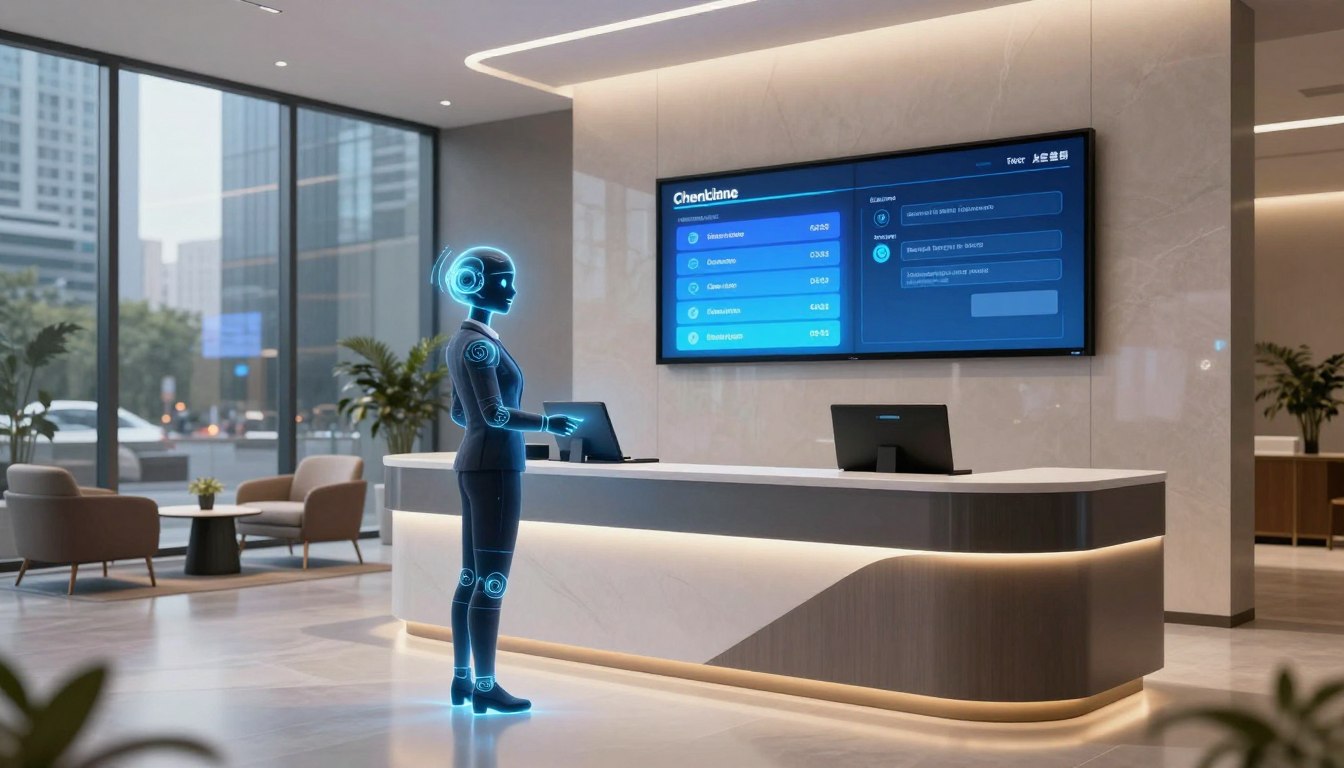

The modern business landscape in the United States is undergoing a rapid transformation. You might notice that the traditional office lobby is changing as companies embrace a virtual ai receptionist to manage daily communications. This shift allows your team to focus on core tasks while ensuring that every caller receives a prompt and professional greeting.
Implementing an automated front desk setup offers a smart way to reduce overhead costs significantly. By moving away from manual processes, you can maintain high service standards without the burden of full-time staffing expenses. This transition is not just about saving money; it is about improving the overall efficiency of your organization.
As we look at the broader implications of front desk replacement, it becomes clear that technology is reshaping the first point of contact for your clients. Embracing these digital tools ensures your business remains competitive in an increasingly fast-paced market. You have the power to modernize your operations and provide a seamless experience for every visitor.
Key Takeaways
- Modern offices are shifting toward automated systems to handle daily communications.
- Using new technology helps businesses significantly lower their monthly overhead costs.
- Professional standards remain high when you integrate smart software into your lobby.
- The transition represents a broader trend of digital transformation across the United States.
- You can improve your client experience by streamlining the first point of contact.
The Evolution of Front Desk Operations
Relying on manual processes for your front desk is becoming a relic of the past in today’s fast-paced business environment. For years, the human-staffed lobby acted as the primary gatekeeper for every organization. However, the rise of global connectivity has made this traditional model increasingly difficult to sustain.
You likely face the challenge of balancing high-touch service with the need for constant availability. As your business grows, the limitations of a single person managing every interaction become clear. Efficiency often suffers when human staff must juggle multiple tasks simultaneously.
The Limitations of Manual Reception
Manual reception often creates significant operational bottlenecks that hinder your company’s growth. When your staff is away from their desk or handling another call, visitors and callers are left waiting. This leads to missed opportunities and a decline in customer satisfaction.
Human receptionists are also bound by strict operating hours, which limits your ability to engage with clients across different time zones. Relying solely on manual processes means your office effectively “closes” when the staff goes home. This lack of 24/7 coverage is a primary driver for businesses seeking a front desk replacement.
The Shift Toward Digital Transformation
The ongoing digital transformation of office workflows has made it necessary to adopt more scalable solutions. By integrating technology into your lobby, you ensure that every visitor is greeted and every call is answered promptly. This transition allows your team to focus on high-value tasks rather than routine administrative duties.
Adopting an automated front desk provides the consistency that human-only models often lack. It offers a seamless experience that scales alongside your business needs. Embracing this digital transformation is no longer just an option; it is a strategic move toward a more efficient front desk replacement that keeps your operations running smoothly around the clock.
Understanding the Virtual AI Receptionist
Understanding the mechanics behind a virtual ai receptionist is the first step toward modernizing your front desk. These systems function as a sophisticated virtual assistant, designed to handle high volumes of communication without human fatigue. By integrating these tools, you can ensure that every caller receives an immediate and professional response.
Core Capabilities of Modern AI Systems
Modern AI business solutions rely on advanced speech recognition to interpret caller intent accurately. Unlike older automated systems, these platforms utilize natural language understanding to process complex requests in real-time. This allows the system to hold fluid conversations that feel remarkably human.
Beyond simple transcription, these tools can perform specific tasks like scheduling appointments or updating client databases. By leveraging AI voice technology, your business can maintain 24/7 availability. This level of customer service automation ensures that no lead is ever lost, regardless of the time of day.
How AI Differs from Traditional Answering Services
Traditional answering services often rely on human operators who may experience delays or inconsistencies during peak hours. In contrast, a virtual ai receptionist provides instant, scalable support that adapts to your specific business needs. You gain a consistent brand voice that never requires breaks or training sessions.
The following table highlights the primary differences between these two approaches to communication management:
| Feature | Traditional Service | AI-Powered System |
|---|---|---|
| Response Time | Variable (Queue-based) | Instant |
| Availability | Limited/Shift-based | 24/7 Always On |
| Scalability | Requires more staff | Infinite/Instant |
| Cost Structure | High per-minute fees | Predictable subscription |
By choosing AI business solutions, you move away from the limitations of manual labor. This transition to customer service automation empowers your team to focus on high-value tasks while the virtual assistant manages routine inquiries. Embracing AI voice technology is a strategic move for any growing organization.
Assessing Your Business Needs for Automation
To improve your business efficiency, you need a clear view of your daily administrative workload. Before adopting new technology, take the time to audit your current processes to see where bottlenecks exist. This preparation ensures that your transition to administrative automation is both smooth and impactful.
Identifying High-Volume Administrative Tasks
Start by tracking your incoming communication for one full week. You will likely find that a significant portion of your calls involves repetitive questions that do not require complex decision-making. These are the perfect candidates for a virtual assistant to handle.
Consider the following tasks that often drain your team’s time:
- Answering frequently asked questions about business hours or location.
- Scheduling routine appointments or service calls.
- Collecting basic contact information from new leads.
- Directing callers to the correct department based on simple prompts.
By offloading these repetitive duties, you allow your human staff to focus on high-value interactions. This shift is a cornerstone of modern AI business solutions designed to streamline your operations.
Determining Budget and Scalability Requirements
When evaluating your budget, look beyond the initial setup costs. Consider the long-term return on investment that comes from increased business efficiency and reduced labor overhead. A scalable system should grow alongside your company without requiring constant manual intervention.
Use this framework to assess your financial and operational readiness:
- Current Volume: Does your call volume justify the cost of a dedicated virtual assistant?
- Growth Projections: Can the platform handle a sudden spike in traffic during peak seasons?
- Integration Costs: Are there hidden fees for connecting the software to your existing tools?
Choosing the right AI business solutions means finding a balance between immediate affordability and future-proof capabilities. By planning for scalability now, you ensure that your administrative automation strategy remains effective as your business expands.
Selecting the Right Virtual AI Receptionist Platform
Navigating the market for receptionist software can feel overwhelming without a clear strategy. You need a solution that aligns with your unique business goals while providing a seamless experience for your callers. By focusing on specific technical requirements, you can ensure your investment delivers long-term value.
Key Features to Look For
When evaluating potential platforms, prioritize systems that offer flexibility and intelligence. A high-quality virtual ai receptionist should act as an extension of your team rather than a rigid script. Look for providers that offer robust customization options to match your brand voice.
Natural Language Processing Capabilities
The core of modern AI voice technology lies in its ability to understand human speech patterns. You should test how well the system handles accents, background noise, and conversational filler words. A system with advanced natural language processing ensures that your clients feel heard and understood during every interaction.
CRM Integration Compatibility
Efficiency increases significantly when your tools communicate with each other. Ensure your chosen platform offers seamless CRM integration with your existing databases. This allows the system to automatically log calls, update contact information, and trigger follow-up tasks without manual data entry.
“The secret of business is to know something that nobody else knows.”
Evaluating Security and Data Privacy Standards
Protecting your client information is non-negotiable in today’s digital landscape. You must verify that any receptionist software you adopt adheres to strict industry standards like HIPAA or GDPR, depending on your sector. Always ask providers about their encryption methods and data storage policies.
| Feature | Basic Systems | Enterprise Platforms |
|---|---|---|
| NLP Accuracy | Standard | Advanced/Contextual |
| CRM Integration | Limited | Full API Access |
| Data Security | Basic Encryption | End-to-End/Compliance Ready |
Choosing the right virtual ai receptionist is a major step toward operational excellence. By prioritizing AI voice technology that supports deep CRM integration, you position your business for sustainable growth. Take the time to vet your options thoroughly to ensure your digital front desk remains secure and highly effective.
Step-by-Step Implementation Strategy
Successful AI implementation begins with a thorough understanding of your current communication patterns. By breaking down the transition into manageable phases, you minimize disruption and ensure your team remains productive during the change.
Mapping Your Current Call Flows
Before you introduce new software, you must document every path a caller takes. Start by tracking how many calls go to specific departments versus general inquiries. This audit helps you identify bottlenecks where administrative automation can provide the most value.
Configuring Automated Greeting Scripts
Your greeting is the first impression a client receives. You should craft scripts that reflect your unique brand voice while remaining clear and concise. Consistency is key to maintaining professional standards across all incoming interactions.
“The goal of automation is not to replace human connection, but to elevate the quality of every interaction by removing repetitive friction.”
Setting Up Routing Logic
Effective call routing ensures that inquiries reach the right person without unnecessary delays. You will need to define rules based on time of day, caller intent, or specific department needs. This technical configuration acts as the backbone of your new system.
Testing and Quality Assurance
Rigorous testing is the final hurdle before going live. You must simulate various scenarios to ensure the system handles edge cases gracefully. This phase guarantees a smooth transition for your callers and builds confidence in your new digital tools.
| Phase | Primary Goal | Key Metric |
|---|---|---|
| Mapping | Identify bottlenecks | Call volume per department |
| Scripting | Brand alignment | Customer sentiment score |
| Routing | Efficiency | Average transfer time |
| Testing | Reliability | Error rate percentage |
By following these steps, you create a robust framework for your office. Proper call routing and thoughtful administrative automation will ultimately save your staff significant time and energy.
Integrating AI with Existing Communication Tools
You can unlock the full potential of your office by bridging the gap between your AI communication tools and your daily management apps. When your receptionist software functions as a standalone unit, you miss out on the power of a unified digital ecosystem. Proper integration ensures that your technology works in harmony to save time and reduce manual errors.

Syncing with Calendar and Scheduling Software
The most immediate benefit of this transition is the ability to implement automated scheduling across your entire organization. By linking your AI system to platforms like Google Calendar, Outlook, or specialized industry booking tools, you allow clients to secure appointments without human intervention.
This process eliminates the back-and-forth emails that often plague administrative staff. Your AI system checks real-time availability and updates your calendar instantly, ensuring that double-bookings become a thing of the past.
Connecting to Internal Messaging Platforms
Beyond scheduling, you must ensure your team stays informed through direct connections to internal messaging platforms like Slack or Microsoft Teams. When a high-priority call arrives, your AI system can trigger an instant notification to the relevant department or staff member.
Furthermore, robust CRM integration allows every interaction to be logged automatically within your database. This means your staff can access a complete history of client communications the moment they pick up the phone. By centralizing this data, you provide a more personalized experience for every caller.
| Integration Type | Primary Benefit | Operational Impact |
|---|---|---|
| Calendar Sync | Automated Scheduling | Eliminates double-bookings |
| Messaging Apps | Real-time Alerts | Faster team response |
| CRM Platforms | Data Centralization | Improved client insights |
Training Your Team for the Transition
Digital transformation is often viewed as a technical challenge, but the human element remains the most critical factor for success. When you introduce new technology, your staff may feel uncertain about their future roles. Open communication is the best way to address these concerns and build confidence across your organization.
Managing Change Within Your Organization
Start by explaining the strategic advantages of your new tools. When employees understand that automated scheduling removes repetitive, low-value tasks, they often feel relieved rather than threatened. Emphasize that these systems are designed to support them, not replace their unique human contributions.
Create a feedback loop where team members can voice their questions or frustrations. Providing hands-on training sessions helps demystify the technology and reduces anxiety. When your staff feels empowered by the tools they use, they become the strongest advocates for your new operational model.
Defining New Roles for Former Front Desk Staff
As your AI handles routine inquiries, your front desk team can pivot toward more meaningful work. You can transition these employees into roles that focus on complex client interactions and relationship management. This shift allows your business to provide a higher level of personalized service that software alone cannot replicate.
Consider the following evolution of responsibilities as you move toward a more automated environment:
| Task Category | Traditional Role | AI-Supported Role |
|---|---|---|
| Appointment Booking | Manual entry and phone calls | Automated scheduling oversight |
| Client Inquiries | Answering basic FAQs | Managing complex client issues |
| Data Management | Paper filing and manual logs | CRM analysis and strategy |
| Office Culture | Task-focused operations | Relationship-focused engagement |
By investing in your people, you ensure that your digital transformation journey is sustainable. Upskilling your team creates a more resilient workforce that is ready to handle the challenges of a modern, fast-paced business environment.
Monitoring Performance and Optimizing Interactions
Achieving peak efficiency requires a commitment to ongoing performance monitoring. By treating your digital infrastructure as a living asset, you ensure that your AI communication tools remain aligned with your business goals. This proactive approach allows you to identify bottlenecks before they impact your bottom line.

Analyzing Call Analytics and Customer Feedback
To understand how your system performs, you must dive deep into your call analytics. These metrics provide a clear picture of call volume, resolution rates, and average handle times. Reviewing this data regularly helps you spot trends that might otherwise go unnoticed.
Beyond raw numbers, direct customer feedback is an invaluable resource. You should actively solicit input from callers to gauge their satisfaction with the automated experience. When you combine quantitative data with qualitative insights, you gain a comprehensive view of your customer service automation effectiveness.
Refining AI Responses for Better Accuracy
Once you have gathered sufficient data, the next step is to refine your system for higher precision. You can adjust your call routing logic to ensure that complex inquiries reach the right human agents faster. This reduces friction and improves the overall quality of every interaction.
Updating your greeting scripts and response patterns is equally important for maintaining accuracy. As your business evolves, your AI communication tools must adapt to new terminology and changing customer needs. By continuously fine-tuning these elements, you strengthen your customer service automation strategy and ensure that your call routing remains seamless and reliable.
Conclusion
Modernizing your communication strategy marks a significant step toward long-term growth. By shifting away from manual processes, you unlock new levels of business efficiency that keep your operations running smoothly around the clock.
Successful AI implementation requires a commitment to ongoing refinement. You now possess the framework to select the right tools and integrate them into your daily workflow. This transition empowers your staff to focus on high-value tasks while technology handles routine inquiries.
You should prioritize the use of call analytics to track your progress and identify areas for improvement. These insights allow you to adjust your automated responses to better serve your clients. Data-driven decisions ensure your organization remains agile in a competitive market.
Start your digital transformation today to see immediate results in your service quality. Your ability to adapt to these new standards will define your success in the coming years. Reach out to your team to begin this transition and secure your place at the forefront of your industry.
FAQ
How does a virtual AI receptionist differ from a traditional answering service?
Unlike traditional answering services that rely on human operators and often result in wait times, a virtual AI receptionist uses advanced natural language understanding and speech recognition to process calls instantly. This AI voice technology provides a more seamless customer service automation experience, allowing your business to handle multiple inquiries simultaneously without the high overhead costs of a 24/7 call center.
Can an automated front desk effectively manage complex office workflows?
Yes. Modern AI business solutions are designed to integrate directly into your office workflows. By setting up sophisticated call routing logic and automated greeting scripts, the system can determine the caller’s intent and direct them to the correct department or provide specific information, mimicking the intelligence of a human receptionist while maintaining business efficiency.
Will this receptionist software integrate with my current CRM like Salesforce or HubSpot?
Most premium receptionist software platforms prioritize CRM integration compatibility. By connecting the AI to tools like Salesforce, HubSpot, or Zendesk, every interaction is logged in real-time. This ensures that your team has immediate access to updated lead information and interaction history, which is vital for maintaining high security and data privacy standards.
How does automated scheduling work with my existing team calendars?
The AI system functions as a virtual assistant by syncing directly with calendar and scheduling software such as Google Calendar or Microsoft Outlook. When a client calls to book an appointment, the AI checks your real-time availability and places the meeting on your schedule. This administrative automation eliminates the back-and-forth of manual booking.
What is the first step in a successful AI implementation for front desk replacement?
The transition begins with mapping your current call flows. You need to audit how calls currently move through your office to identify high-volume administrative automation tasks. Once you understand these patterns, you can configure the AI to handle repetitive inquiries, allowing your human staff to transition into more complex, value-added roles within the organization.
How do I monitor the performance of my AI communication tools?
You can track success through comprehensive call analytics provided by the platform. By reviewing performance metrics and customer feedback, you can identify areas where the natural language processing may need refinement. This data-driven approach allows you to constantly optimize AI responses for better accuracy and a more professional caller experience.
Is my client data safe when using these AI business solutions?
Security is a cornerstone of professional AI implementation. When selecting a platform, you should verify that it meets global security and data privacy standards, such as GDPR, SOC2, or HIPAA compliance. These protocols ensure that all voice data and client information handled by your virtual AI receptionist remain encrypted and protected from unauthorized access.