


Winning a new client is often much harder than keeping an old one. You need to build lasting bonds that turn one-time buyers into true fans. Modern tools help you reach this goal faster than ever before.
Smart CRM automation lets you handle daily tasks while you focus on human connections. You can streamline your work to ensure no client feels ignored or forgotten. This process makes your business look professional and highly attentive.
This approach helps you track every interaction with care and precision. You will boost customer loyalty by giving your audience exactly what they need at the right moment. It removes the guesswork from your marketing and sales efforts.
When you focus on customer retention, your company sees steady and predictable growth. Personalizing these experiences creates a community that trusts your brand for many years. Long-term success starts with how well you treat the people you already serve.
Key Takeaways
- Lower marketing costs by keeping your current users.
- Build stronger bonds through high-level personalization.
- Save your team time with digital workflows and tools.
- Boost brand trust with consistent and fast communication.
- Drive long-term growth by reducing client turnover.
- Identify the needs of your audience with better data.
Understanding the Critical Link Between CRM Systems and Customer Loyalty
Understanding how CRM systems influence customer loyalty is essential for developing effective customer retention strategies. Customer loyalty is the backbone of any successful business, and CRM systems are the tools that help you understand and nurture it.
Effective customer relationship management is about more than just storing customer data; it’s about using that data to create meaningful interactions that foster loyalty.
Why Traditional Customer Management Falls Short
Traditional customer management approaches often rely on manual processes and siloed data, making it difficult to provide a unified customer experience. These methods can lead to missed opportunities, as they fail to leverage the full potential of customer data.
For instance, without a comprehensive view of customer interactions, businesses may struggle to personalize their communications, leading to a lack of engagement and, ultimately, a decline in customer loyalty.
The Evolution of Customer Relationship Management
The evolution of CRM systems has transformed the way businesses interact with their customers. Modern CRM systems offer advanced analytics, automation, and integration capabilities that enable companies to deliver highly personalized experiences.
By leveraging these capabilities, businesses can anticipate customer needs, respond promptly to their inquiries, and build strong, lasting relationships.
What CRM Automation Means for Your Business
In today’s competitive market, leveraging CRM automation is no longer a luxury but a necessity for businesses aiming to improve customer retention. By automating routine tasks and leveraging data-driven insights, businesses can significantly enhance their customer relationship management.
CRM automation involves using technology to automate repetitive and mundane tasks within the CRM system, such as data entry, follow-up emails, and lead qualification. This not only saves time but also reduces the likelihood of human error, ensuring that customer data is accurate and up-to-date.
Core Components of Automated CRM Systems
Automated CRM systems typically include several core components that work together to streamline customer management processes. These components include:
- Automated data capture and entry
- Lead scoring and qualification
- Personalized marketing automation
- Sales forecasting and pipeline management
- Customer service and support automation
As noted by a CRM expert,
“Automation is not just about reducing manual labor; it’s about creating a more efficient, responsive, and personalized customer experience.”
The Difference Between Manual and Automated CRM Processes
Manual CRM processes rely heavily on human intervention for tasks such as data entry, customer follow-ups, and sales tracking. While effective to a certain extent, manual processes are time-consuming, prone to errors, and often result in inconsistent customer experiences.
In contrast, automated CRM processes use technology to perform these tasks, ensuring consistency, accuracy, and efficiency. Automation enables businesses to respond promptly to customer inquiries, personalize interactions based on customer data, and analyze customer behavior to predict future trends.
By understanding the differences between manual and automated CRM processes, businesses can make informed decisions about how to optimize their customer relationship management strategies.
Why Customer Retention Directly Impacts Your Bottom Line
Understanding the financial implications of customer retention is crucial for any business aiming to maximize its profitability. The costs associated with acquiring new customers versus retaining existing ones can significantly affect your bottom line.
The Cost Comparison: Acquisition vs. Retention
Acquiring new customers can be expensive. Studies have shown that it can cost up to five times more to attract a new customer than to retain an existing one. This disparity is due to the various costs associated with marketing and sales efforts targeted at potential customers. In contrast, retaining customers involves nurturing existing relationships, which can be more cost-effective.
For instance, a study by Bain & Company found that increasing customer retention rates by just 5% can lead to profit increases of 25% to 95%. This significant impact on profitability underscores the importance of focusing on customer retention strategies.
How Retention Rate Affects Customer Lifetime Value
Customer Lifetime Value (CLV) is a critical metric that represents the total value a customer brings to your business over their lifetime. A higher retention rate directly contributes to an increase in CLV. When customers remain loyal to your brand, they are more likely to make repeat purchases, refer others, and engage in other valuable behaviors that enhance their lifetime value.
For example, a customer who consistently purchases from your business over several years is more valuable than a one-time buyer. By improving your retention rate, you can significantly boost the average CLV, thereby enhancing your revenue streams and improving your bottom line.
To maximize the financial benefits of customer retention, it’s essential to implement effective retention strategies that foster loyalty and encourage long-term customer relationships.
Personalizing Customer Experience at Scale with Automation
By leveraging CRM automation, you can revolutionize the way you interact with your customers, making every experience feel tailored to their needs. This personalization is crucial in today’s competitive business landscape, where customers expect to be treated as individuals rather than mere numbers.
CRM automation enables businesses to scale their personalization efforts without compromising on relevance or quality. By automating routine tasks and leveraging data-driven insights, you can create targeted marketing campaigns that resonate with your audience.

Automated Segmentation for Targeted Messaging
One of the key benefits of CRM automation is the ability to segment your customer base with precision. By categorizing customers based on their behavior, preferences, and demographic data, you can create highly targeted messaging that speaks directly to their needs.
- Demographic segmentation allows you to tailor your messaging based on age, location, and other relevant factors.
- Behavioral segmentation enables you to target customers based on their interactions with your brand.
- Preference-based segmentation ensures that customers receive content that aligns with their interests.
Behavioral Triggers That Respond to Customer Actions
Behavioral triggers are automated responses to specific customer actions, such as making a purchase or abandoning a shopping cart. These triggers enable you to engage with customers at the right moment, enhancing their overall experience.
- Cart abandonment triggers can be used to remind customers about their unfinished purchases.
- Purchase anniversary triggers allow you to celebrate milestones with your customers.
- Product review triggers encourage customers to share their feedback.
Dynamic Content Delivery Based on Individual Preferences
Dynamic content delivery involves serving content that is tailored to the individual preferences of each customer. This can be achieved through CRM automation, which analyzes customer data to determine the most relevant content.
For instance, you can use CRM automation to deliver personalized product recommendations based on a customer’s browsing history and purchase behavior. This not only enhances the customer experience but also increases the likelihood of conversion.
Streamlining Communication Through Automated Customer Touchpoints
In today’s competitive market, maintaining consistent and personalized communication with customers is crucial, and CRM automation makes it achievable. By automating customer touchpoints, businesses can ensure that their interactions are timely, relevant, and tailored to individual customer needs.
Timely Follow-Ups That Keep Your Brand Top of Mind
One of the key benefits of CRM automation is the ability to send timely follow-ups that keep your brand at the forefront of customers’ minds. Automated follow-up emails or messages can be triggered based on specific customer actions or milestones, ensuring that your business stays connected with its customers.
- Post-purchase follow-ups to ensure customer satisfaction
- Regular newsletters to keep customers informed about new products or services
- Re-engagement campaigns to reactivate dormant customers
Multi-Channel Coordination for Consistent Experiences
Multi-channel coordination is another critical aspect of CRM automation. By integrating various communication channels, businesses can provide a seamless and consistent customer experience across different platforms.
For instance, a customer might receive a promotional email about a new product and then see a related ad on social media. This consistent messaging reinforces the brand’s message and enhances customer engagement.
- Email marketing campaigns
- Social media interactions
- SMS and push notifications
Automated Birthday and Anniversary Recognition
Recognizing special occasions such as birthdays and anniversaries can significantly enhance customer loyalty. CRM automation allows businesses to automatically send personalized messages or offers on these significant dates, making customers feel valued and appreciated.
“Personalization is not just about addressing customers by their names; it’s about understanding their preferences and behaviors to deliver relevant content.”
By implementing these automated customer touchpoints, businesses can streamline their communication processes, improve customer engagement, and ultimately drive retention and growth.
Predicting and Preventing Customer Churn with Data-Driven Insights
Data-driven insights play a pivotal role in identifying early warning signs of customer churn, enabling businesses to intervene before it’s too late. By leveraging advanced CRM automation tools, you can analyze customer behavior, preferences, and interactions to predict potential churn.
Early Warning Systems Through Automated Data Analysis
Automated data analysis is the cornerstone of an effective early warning system. By continuously monitoring customer interactions, such as purchase history, login frequency, and support requests, CRM automation can identify patterns that indicate a customer is at risk of churning.
For instance, a sudden drop in purchase frequency or a significant decrease in engagement with your product or service can signal potential churn. CRM automation tools can analyze these metrics in real-time, providing timely alerts that enable you to take proactive measures.
“The key to successful customer retention is not just about reacting to churn but predicting and preventing it through data-driven insights.”
Here’s an example of how automated data analysis can help in predicting churn:
| Customer Behavior | Indicator | Potential Action |
|---|---|---|
| Decrease in Purchase Frequency | Potential Churn | Personalized Re-engagement Campaigns |
| Increased Support Requests | Potential Dissatisfaction | Proactive Support Outreach |
| Login Frequency Drops | Potential Disengagement | Targeted Promotional Offers |
Proactive Intervention Strategies for At-Risk Customers
Once you’ve identified at-risk customers, it’s crucial to implement proactive intervention strategies. This can include personalized communication, offering tailored solutions or incentives to re-engage them.
For example, if a customer has shown a decrease in purchase frequency, you can trigger an automated campaign offering them a special discount on their next purchase or a bundle deal that includes products they’ve shown interest in.

Re-engagement Campaigns That Win Back Inactive Users
Re-engagement campaigns are a vital component of preventing customer churn. By analyzing customer data, you can create targeted campaigns that speak directly to the needs and preferences of inactive users.
These campaigns can include win-back emails, special offers, or even surveys to understand why customers became inactive. The goal is to re-establish a connection and encourage them to re-engage with your brand.
By leveraging CRM automation for predicting and preventing customer churn, you can significantly enhance customer retention and foster a loyal customer base.
Enhancing Customer Support Response and Resolution Times
As customer expectations continue to rise, businesses must adopt CRM automation to improve their customer support response and resolution times. By leveraging automated systems, you can ensure that your customers receive timely and effective support, leading to increased satisfaction and loyalty.
One of the key benefits of CRM automation is its ability to streamline customer support processes. This is achieved through several key features, including automated ticketing and prioritization systems, knowledge base integration, and complete customer history access.
Automated Ticketing and Prioritization Systems
Automated ticketing systems allow you to manage customer inquiries more efficiently. By automatically assigning tickets to the relevant support agents, you can ensure that issues are addressed promptly. Prioritization features enable you to categorize tickets based on urgency, ensuring that critical issues are resolved first.
Benefits of Automated Ticketing Systems:
- Faster response times
- Improved issue resolution rates
- Enhanced customer satisfaction
Knowledge Base Integration for Instant Self-Service
Knowledge base integration enables customers to find answers to common questions instantly. By providing a comprehensive knowledge base, you can reduce the number of support tickets and empower customers to self-serve.
Key Features of Knowledge Base Integration:
- Easy access to relevant information
- Reduced support ticket volume
- Improved customer experience
Complete Customer History Access for Contextual Support
Having access to a customer’s complete history allows support agents to provide contextual support. This means that agents can view previous interactions, purchases, and issues, enabling them to offer more personalized and effective solutions.
| Feature | Benefit |
|---|---|
| Automated Ticketing | Faster issue resolution |
| Knowledge Base Integration | Reduced support tickets |
| Complete Customer History | Personalized support |
By implementing these CRM automation features, you can significantly enhance your customer support response and resolution times. This not only improves customer satisfaction but also contributes to a positive brand image.
Measuring Retention Success with Automated Analytics and Reporting
Measuring retention success is streamlined through automated analytics and reporting, enabling businesses to make data-driven decisions. By leveraging the analytical capabilities of your CRM system, you can gain a deeper understanding of your customer retention performance.
Automated analytics and reporting provide a comprehensive view of your retention efforts, highlighting areas of strength and opportunities for improvement. This insight is crucial for refining your strategies to maximize customer loyalty and retention.
Essential Retention Metrics Your CRM Should Track
To effectively measure retention success, it’s vital to track the right metrics. Your CRM system should monitor and analyze key performance indicators (KPIs) such as customer churn rate, retention rate, and customer lifetime value (CLV).
- Customer Churn Rate: This metric indicates the percentage of customers who stop doing business with your company over a certain period.
- Retention Rate: The opposite of churn rate, this measures the percentage of customers retained.
- Customer Lifetime Value (CLV): CLV predicts the total value a customer will bring to your business over their lifetime.
As emphasized by industry experts, “Understanding and acting on these metrics can significantly enhance your customer retention strategies.”
“The key to successful customer retention is not just about keeping customers, but understanding their needs and delivering value continuously.”
Real-Time Dashboard Visualization for Actionable Insights
Real-time dashboard visualization is a powerful tool within CRM systems, offering immediate insights into your retention metrics. These dashboards provide a clear, visual representation of your data, making it easier to identify trends and patterns.
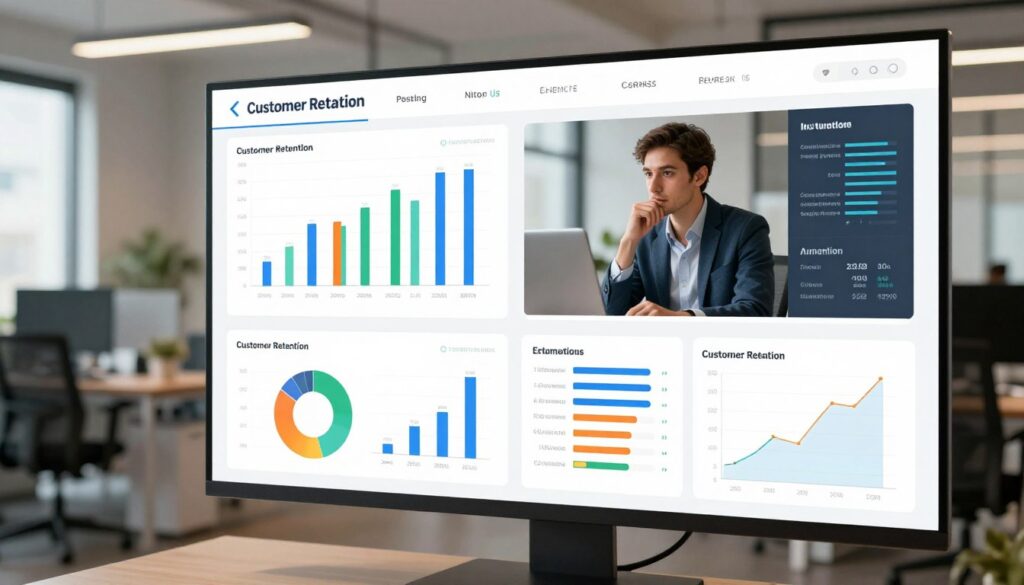
With real-time data at your fingertips, you can respond promptly to changes in customer behavior, adjusting your strategies to improve retention. This proactive approach ensures that you’re always aligned with your customers’ evolving needs.
Building Customer Loyalty Programs with CRM Automation
By leveraging CRM automation, businesses can create sophisticated customer loyalty programs that reward and retain customers effectively. Customer loyalty programs are designed to encourage repeat business and foster long-term relationships with customers.
One of the key benefits of using CRM automation for customer loyalty programs is the ability to track and distribute rewards efficiently. Automated reward tracking ensures that customers receive their rewards in a timely manner, enhancing their overall experience with your brand.
Automated Reward Tracking and Distribution
Automated reward tracking and distribution streamline the process of managing customer loyalty programs. With CRM automation, you can:
- Track customer purchases and interactions accurately
- Automatically assign rewards based on predefined criteria
- Notify customers about their reward status and redemption options
This not only improves customer satisfaction but also reduces the administrative burden on your team, allowing them to focus on more strategic initiatives.
Tiered Loyalty Programs That Encourage Repeat Purchases
Tiered loyalty programs are an effective way to encourage customers to make repeat purchases. By offering different tiers with increasing rewards, you can motivate customers to climb the loyalty ladder.
CRM automation enables you to manage tiered loyalty programs seamlessly, ensuring that customers are correctly categorized and rewarded according to their tier status.
Personalized Incentives Based on Customer Behavior
Personalization is key to making customer loyalty programs effective. CRM automation allows you to analyze customer behavior and preferences, enabling you to offer personalized incentives that resonate with individual customers.
By tailoring your loyalty programs to meet the unique needs and preferences of your customers, you can significantly enhance their engagement and loyalty.
Some benefits of personalized incentives include:
- Increased customer engagement
- Improved customer retention
- Enhanced brand loyalty
Implementing Your CRM Automation Strategy for Maximum Retention Impact
To maximize the impact of your CRM automation on customer retention, it’s crucial to develop a well-structured implementation plan. This involves understanding your business needs, selecting the appropriate CRM platform, designing effective automation workflows, and ensuring your team is adequately trained.
A successful CRM automation strategy starts with a clear understanding of your business objectives and how they align with customer retention goals. By leveraging CRM automation, you can streamline processes, enhance customer engagement, and ultimately drive long-term growth.
Selecting the Right CRM Platform for Your Business Needs
Choosing the right CRM platform is foundational to a successful automation strategy. Consider the following key factors when making your selection:
- Scalability: Ensure the platform can grow with your business.
- Integration: Opt for a CRM that integrates seamlessly with your existing tools and systems.
- Customization: Select a platform that allows for customization to meet your specific business needs.
- User Experience: Choose a CRM with an intuitive interface to facilitate adoption among your team members.
Creating Effective Automation Workflows That Drive Results
Effective automation workflows are critical to maximizing the benefits of your CRM. To create workflows that drive results:
- Identify repetitive tasks that can be automated, such as follow-up emails or data entry.
- Map out customer journeys to understand touchpoints that can be optimized through automation.
- Set clear goals for what you want to achieve with each automated workflow.
By streamlining these processes, you can enhance efficiency and improve customer satisfaction.
Training Your Team for Successful Adoption and Usage
For your CRM automation strategy to be successful, it’s essential that your team is properly trained. This includes:
- Comprehensive Onboarding: Ensure that all team members understand the CRM’s capabilities and how to use it effectively.
- Ongoing Support: Provide continuous training and support to address any questions or issues that arise.
- Encouraging Adoption: Foster a culture that encourages the use of the CRM for daily operations.
By following these steps, you can ensure a smooth transition to automated CRM processes and maximize the impact on customer retention.
Conclusion
As you’ve seen throughout this article, CRM automation plays a vital role in enhancing customer retention and fostering loyalty. By streamlining communication, personalizing customer experiences, and predicting potential churn, businesses can significantly improve their relationships with customers.
Effective CRM automation enables you to respond promptly to customer actions, deliver targeted messaging, and provide timely support. This not only boosts customer satisfaction but also encourages repeat business and positive word-of-mouth.
To drive long-term growth and success, it’s essential to adopt a CRM automation strategy that aligns with your business needs. By doing so, you’ll be better equipped to retain customers, build strong loyalty, and ultimately improve your bottom line through increased customer lifetime value.
FAQ
How does CRM automation specifically increase my customer retention?
By utilizing platforms like HubSpot or Salesforce, you can create automated workflows that deliver personalized messages at the exact moment a customer needs them. This ensures no client feels neglected, effectively building the long-term loyalty necessary for sustainable growth while eliminating the risk of human error in follow-ups.
Why is retaining current customers more cost-effective than acquiring new ones?
Marketing data consistently shows that acquiring a new customer can cost significantly more than keeping an existing one. By improving your Customer Lifetime Value (CLV) through automated CRM systems, you maximize the revenue from your current base, which directly stabilizes your bottom line and lowers your overall customer acquisition costs.
What are behavioral triggers, and how do they impact my marketing strategy?
Behavioral triggers are automated responses to specific actions your customers take, such as clicking a link, downloading a whitepaper, or abandoning a digital cart. Using tools like ActiveCampaign, you can send dynamic content that addresses their immediate interests, making your brand feel attentive, relevant, and highly responsive to their individual needs.
How can automated data analysis help me predict and prevent customer churn?
Your CRM tracks engagement patterns that are often invisible to the naked eye. By setting up early warning systems, the software identifies a drop in interaction—such as fewer logins or reduced purchase frequency—allowing your team to launch a proactive re-engagement campaign to win back at-risk users before they leave for a competitor.
Will CRM automation make my customer support feel impersonal or robotic?
On the contrary, it enhances the human touch by providing context. When your support team uses Zendesk or Salesforce Service Cloud, they gain instant access to a complete customer history. This allows them to provide contextual support and resolve issues faster, which significantly boosts your Customer Satisfaction Score (CSAT) and Net Promoter Score (NPS).
What should I look for when selecting a CRM platform to manage loyalty programs?
You should prioritize a system that offers automated reward tracking and tiered loyalty structures. Platforms like Zoho CRM or Oracle NetSuite allow you to distribute personalized incentives based on specific customer behavior, ensuring your most frequent buyers feel recognized and rewarded without manual intervention from your staff.
How do real-time dashboards improve my retention strategy?
Real-time dashboard visualization transforms raw data into actionable insights. Instead of waiting for end-of-month reports, you can monitor essential retention metrics as they happen. This allows you to adjust your automation workflows instantly to address emerging trends or shifts in customer sentiment.
What is the first step in implementing a CRM automation strategy?
The process begins with selecting the right CRM platform that aligns with your specific business scale and goals. Once chosen, you must focus on creating effective automation workflows and, crucially, training your team to ensure they understand how to use these tools to foster deeper customer relationships rather than just managing data.